How to Remove Oil Stains from Walls Without Damaging the Paint
 Feb , 2026
- Berger Speaks
- 4 Min Read
Oil stains on walls are quite common in Indian homes, especially around kitchens, dining areas, and switchboards, where hands often touch the surface. Over time, these marks can spread, darken, or start to dull the paint if they are left unattended. Many people assume the only solution is repainting, but that is not always necessary. It is possible to remove oil stains from walls with a few simple ingredients. In this blog, we will look at practical ways to clean oil stains from walls and keep your paint looking fresh.
Things to Do Before Cleaning Oil Stains
For those wondering how to remove oil stains from walls, you need to take a few precautions first. A little care at the beginning makes the cleaning process much safer and more effective.
Keep these points in mind before you begin:
- Identify the type of paint on the wall (matte, satin, semi-gloss, or textured).
- Always test the method to remove stains from walls on a small, hidden spot first.
- Avoid strong chemicals or metal scrubbers that can scratch the paint.
- Use gentle pressure while cleaning to prevent fading or peeling.
Safe Methods to Remove Oil Stains from Walls
You are aware of the precautions to take before beginning the cleaning process. So, how do you get oil stains out of walls? The method will vary based on what kind of stain it is. The following are some of the simple ways that most painted walls will respond to.
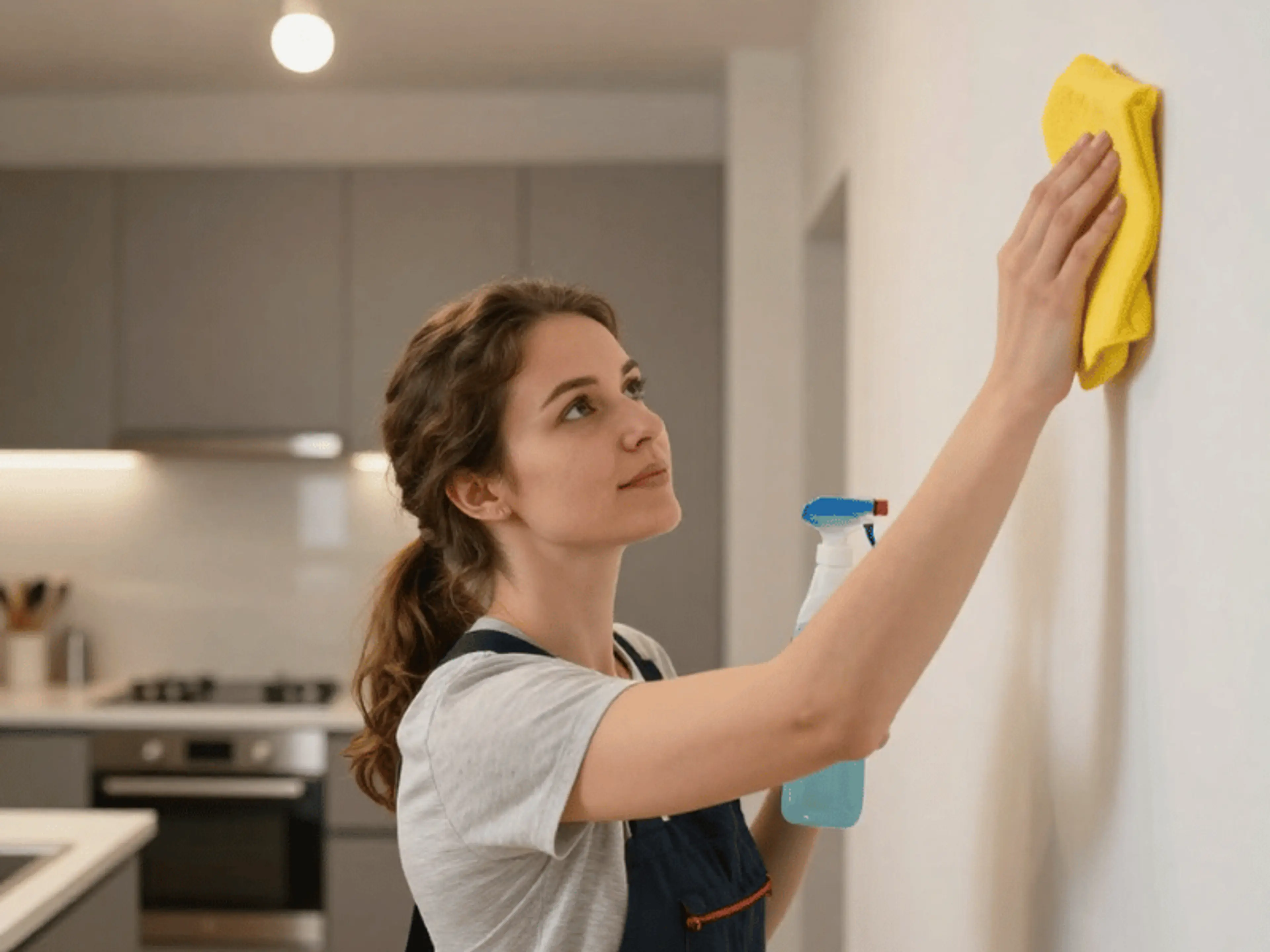
1. Use Dishwashing Liquid and Warm Water
Dishwashing liquid is one of the best solutions to clean oil from walls. It removes the grease by dissolving the molecules. This method works best for fresh or lighter stains.
Steps:
- Mix a little mild dishwashing soap in warm water.
- Use a soft sponge or microfibre cloth to dip into the solution.
- Blot the stain, don’t rub it.
- Dab the affected site with a moist, clean cloth and allow it to dry.
2. Baking Soda Paste Method
Baking soda works if you’re wondering how to clean oil from walls. It works well to cut into oil without damaging painted surfaces. This solution is particularly suitable for removing stubborn stains.
Steps:
- Add enough water to the baking soda to create a paste.
- Spread the paste gently onto the stained portion.
- Keep it on the wall for 5-10 minutes.
- Simply wipe it off with a damp towel without scrubbing.
- Wipe the area again with plain water to remove any residue.
3. Cornflour or Talcum Powder (Oil Absorption)
Grease marks are common on the walls in your kitchen. These might come from oil splashes while cooking. That’s why a lot of people wonder how to remove grease from kitchen walls. The easiest solution is to absorb the oil before it settles into the paint. Cornflour and talcum powder can both help pull grease away from the surface.
Steps:
- Make a paste of cornflour or talcum powder and sprinkle it directly onto the stain.
- Let it sit for about 15–20 minutes so that it can absorb the grease.
- Gently brush the powder off with a dry cloth.
- Wipe the area with soapy water if necessary.
4. Vinegar and Water Solution
Many wonder how to remove grease from walls without removing paint. White vinegar is often one of the best solutions. It cuts through grease and helps remove dull oil stains on surfaces. But this solution only works for washable paints.
Steps:
- Take equal parts water and white vinegar in a bowl.
- Gently blot the stain with a soft cloth soaked in the solution.
- Wipe the area with clean water and dry it with a cloth.
What Not to Do When Cleaning Oil Stains
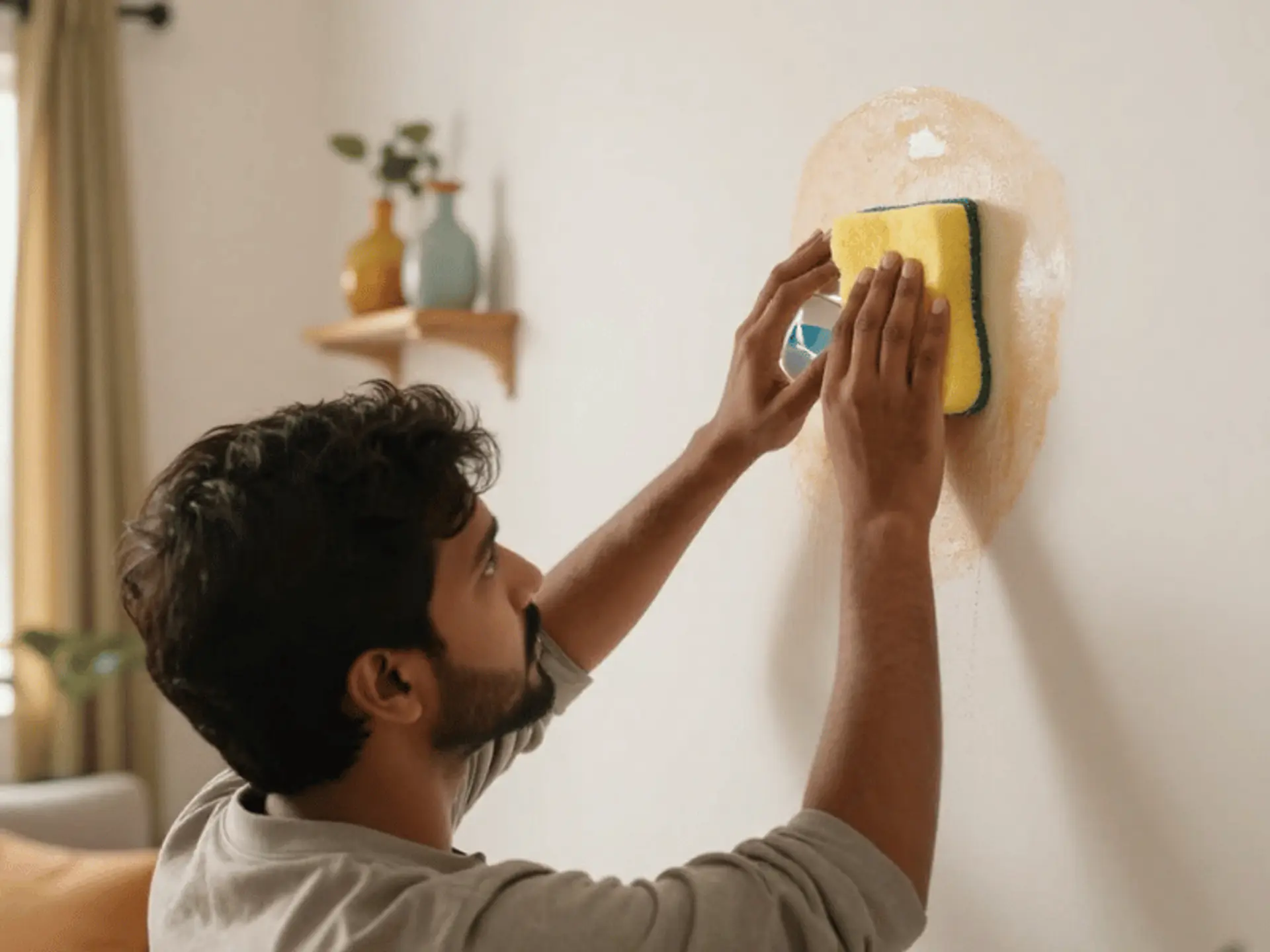
While you clean oil marks off walls, it is just as important to know what to avoid. Some cleaning habits can damage paint quickly and leave permanent marks on the wall.
Avoid the following:
- Do not use bleach, acetone or paint thinner.
- Never scrub the wall with stiff brushes or steel wool.
- Do not clean walls that have been painted within 2-3 weeks.
You want to be easy on the surface so you don't lift the colour or finish.
Tips to Prevent Oil Stains on Walls
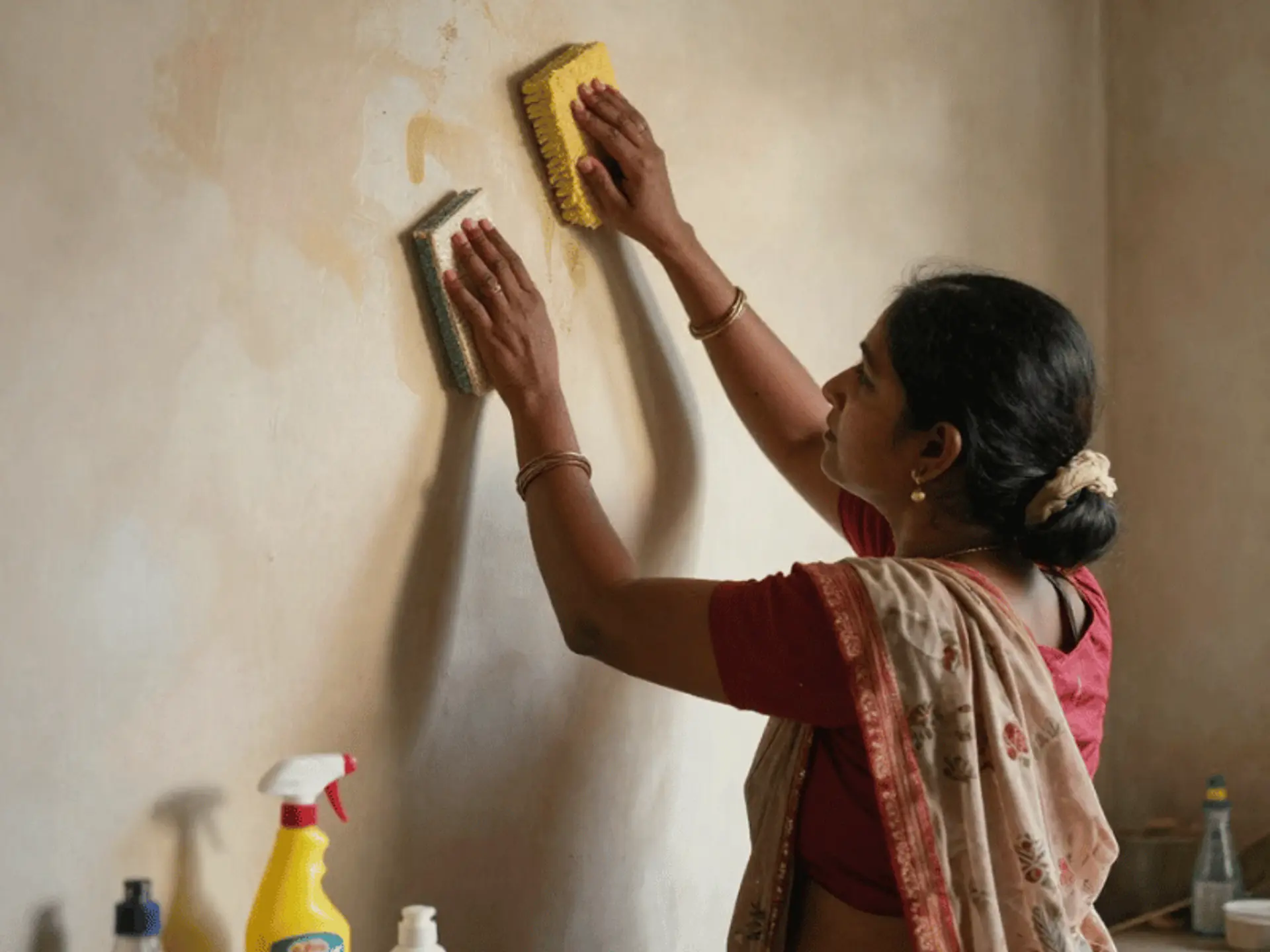
You can try the following:
- Set up a kitchen backsplash or wall tiles around cooking areas.
- Use washable or stain-resistant paints in frequently used spaces.
- Wipe oil dots immediately after they appear on the paint surface to prevent them from settling deep.
- Wherever possible, maintain a small distance between the wall and the cooking zone.
When to Repaint Instead of Cleaning
The oil might soak deeply into the wall paint layer. Cleaning won’t be helpful in such situations. Repainting might be the better option.
You may need repainting if:
- The stain has penetrated deep into the paint.
- The paint is peeling, bubbling, or damaged.
- The wall has repeated oil stains in the same area.
It is best to apply a primer or stain-blocking paint before repainting the wall.
Conclusion
Oil stains on walls are common in homes. But they do not always call for repainting or aggressive cleaning. Berger Express Painting services bring multiple ideas of creativity to life with their various painting possibilities using high-quality, washable paints that not only highlight the beauty of your wall but also safeguard it from stains in the future. With the proper paint solutions and advice on how to get grease off walls, you can make your home look new again.
check for any query you have about the blog
Frequently Asked Questions
It might not be enough to just wash off with water. A little soap or a gentle cleaning solution is much more effective.
It's just a good idea to clean them as soon as you become aware of them. Fresh stains come out much more easily.
Stay away from harsh chemicals and abrasive scrubbers. They might chip off the paint.
If the stain has reached deep into the paint or if the wall is peeling, cleaning might not help. In these cases, repainting a wall is probably the better choice.